
Foundry Long Island / 001
You don’t need to be an entrepreneur to discover the next great company.
Tell us the problem.
If we believe there’s a real business inside it, we’ll investigate it and determine what should exist.
If your insight helps create that company, there’s a path for you to participate in its ownership.
Problem / Insight / Opportunity / Company
Great companies often begin with someone noticing something everyone else has learned to tolerate.
You might have spent thirty years in an industry or three months in a frustrating job. You might run a business, work inside one, serve customers, care for patients, build things, manage teams, or simply encounter the same broken experience over and over.
What kind of problem?
You don’t need a startup idea.
You don’t need market research.
You don’t need a business plan.
You don’t need a pitch deck.
You don’t need technical knowledge.
You don’t need to know how to code.
You don’t need to want to become a founder.
You only need to recognize that something doesn’t work well.
“Everyone in my industry still does this manually.”
“Customers constantly complain about this.”
“Hiring for this position is nearly impossible.”
“There has to be an easier way to do this.”
“This works terribly, but everyone assumes that’s just how it is.”
That’s enough to start.
Tell Us the ProblemFrom problem to company.
- 01
Problems are surfaced
People tell us what is broken, who it affects, and why it matters.
- 02
Opportunities are investigated
Foundry works to understand which problems are real and worth solving.
- 03
The right ones become something useful
A solution, a product, or a new company built around what should exist.
What we learn shapes what should exist — a new company, a solution for the organization living with the problem, or nothing at all.
Not every problem needs a new company.
Some problems reveal an opportunity large enough to build a company around. Others are real, valuable problems that are specific to the business experiencing them.
A new company should exist
If the problem is broad, repeatable, and commercially meaningful, Foundry may build a venture around it.
A solution should exist for your business
If the problem is worth solving but does not need to become a standalone company, Foundry may work with you directly to build the solution.
For businessesEither way, it starts with the problem.
Tell Us the ProblemYou spotted it. You can be part of what comes next.
Some people want to build the company. Some want to help shape it. Others simply spotted a problem worth solving. When an insight meaningfully helps create a new venture, there may be a path to participate in its ownership.
When a problem becomes a new Foundry venture, there may be a path for meaningful contributors to participate in what gets built.
Surface the problem
You brought the insight.
Build it with us
You want to become part of the founding team.
Help shape it
You bring expertise, customers, industry knowledge, or access that can help the company succeed.
Participation, compensation, and ownership are never automatic and are determined separately based on contribution and mutual agreement.

Sometimes we go looking.
Foundry Problem Rooms bring people from the same industry together to surface problems hiding in plain sight.
What does everyone in your industry know is broken?
Explore Problem RoomsSome people know the problem. Others know how to build the solution. Foundry brings the two together.
The Builder Network assembles the people needed for opportunities that earn the right to be built. Engagement may be paid, equity-based, a venture role, or a combination agreed before work begins.
Join the Builder NetworkTurn insight into something usable.
Shape the experience.
Build what should exist.
Help turn it into a company.
Bring deep industry knowledge.
It takes more than builders to create a company.
Foundry identifies and brings in the right legal, financial, operational, and professional support as each venture takes shape.
Join the Foundry BenchCapital follows proof.
When a Foundry venture proves there’s a real problem and a solution worth building, we help connect it with the capital appropriate to the opportunity.
Not every company needs outside capital. The capital path depends on what the company actually requires.
Join the Capital NetworkBuilt around the work.
Foundry works with Long Island institutions, businesses, universities, investors, and professional partners when their expertise, resources, or relationships can help a promising opportunity take shape.
The right collaboration helps turn opportunity into progress.
Partner With FoundryLong Island has a history of building what comes next.
Different eras. Different industries. The same pattern: people close to the work saw what was missing, understood what mattered, and helped build something new.
- 1890Long Island
Cold Spring Harbor

Cold Spring Harbor Laboratory traces its origins to 1890 and became one of Long Island’s defining scientific institutions.
- 1927Long Island
Roosevelt Field

Charles Lindbergh took off from Roosevelt Field on Long Island for his historic nonstop flight to Paris.
- 1930Long Island
Baldwin

Leroy Grumman and his small team opened Grumman Aircraft Engineering in a modest converted industrial space in Baldwin. It became one of Long Island’s defining aerospace businesses.
- 1960sLong Island
Bethpage

Grumman built the Apollo Lunar Modules in Bethpage — spacecraft built on Long Island that carried astronauts to the lunar surface.
- 1971Long Island
Stony Brook

Stony Brook researcher Paul Lauterbur created an early multidimensional image using nuclear magnetic resonance, work that helped establish the foundation of modern MRI.
- 1992Long Island
Stony Brook

The Long Island High Technology Incubator opened to help turn research and technology into new companies.
- 2026LONG ISLAND
What’s next?
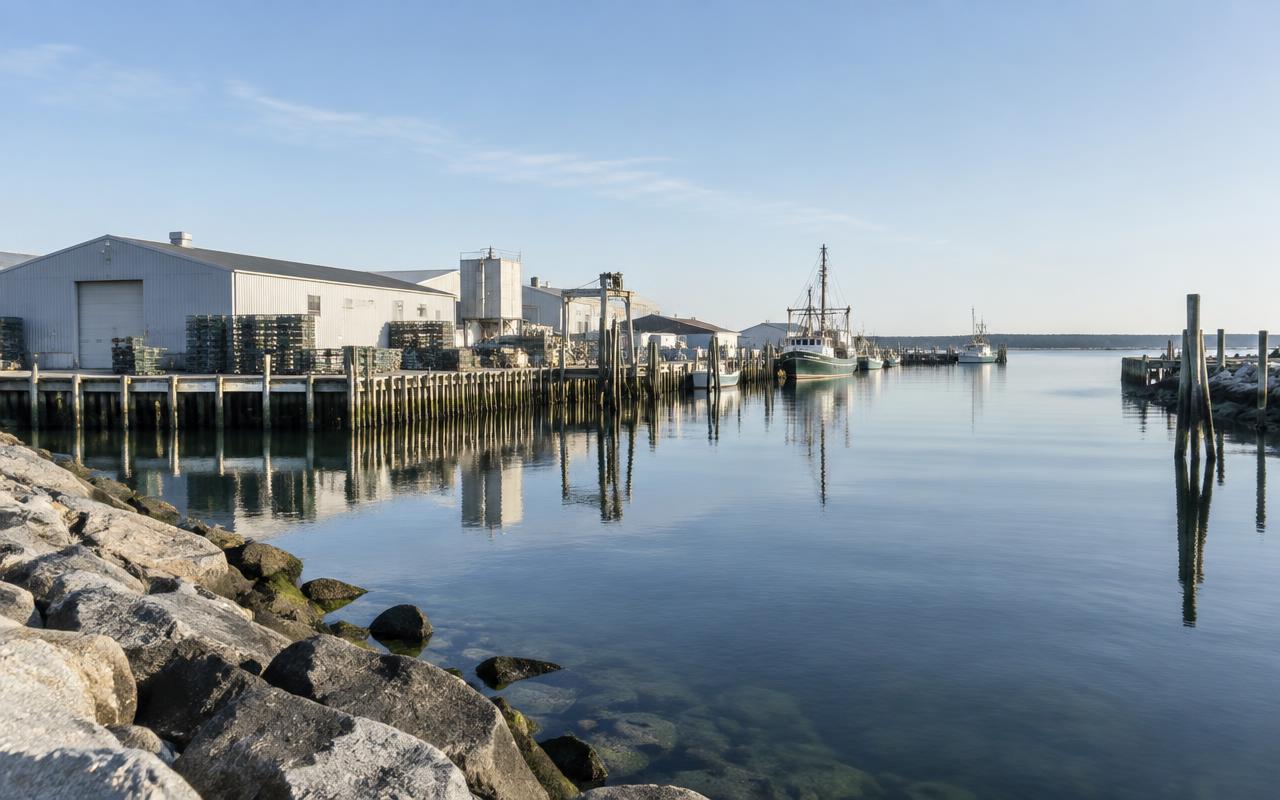
The next important company here may not begin with a founder. It may begin with someone who understands a problem deeply.
Tell Us the Problem

There are companies
hiding inside problems
Long Islanders encounter
every day.
Most will never become businesses.
Some shouldn’t.
A few could become
very important.